
Roundup · Posted Oct 20, 2026
“The impressive effects of tutoring”
Dozens of experiments, preschool to 12th grade. One of them, in high school:
9 slides · swipe
Plays silent here. Watch with sound on Instagram
"The impressive effects of tutoring."
That's the title of a review by researchers Andre Nickow, Philip Oreopoulos and Vincent Quan, who pooled dozens of tutoring experiments from preschool through 12th grade. They found tutoring programs "yield consistent and substantial positive impacts on learning outcomes."
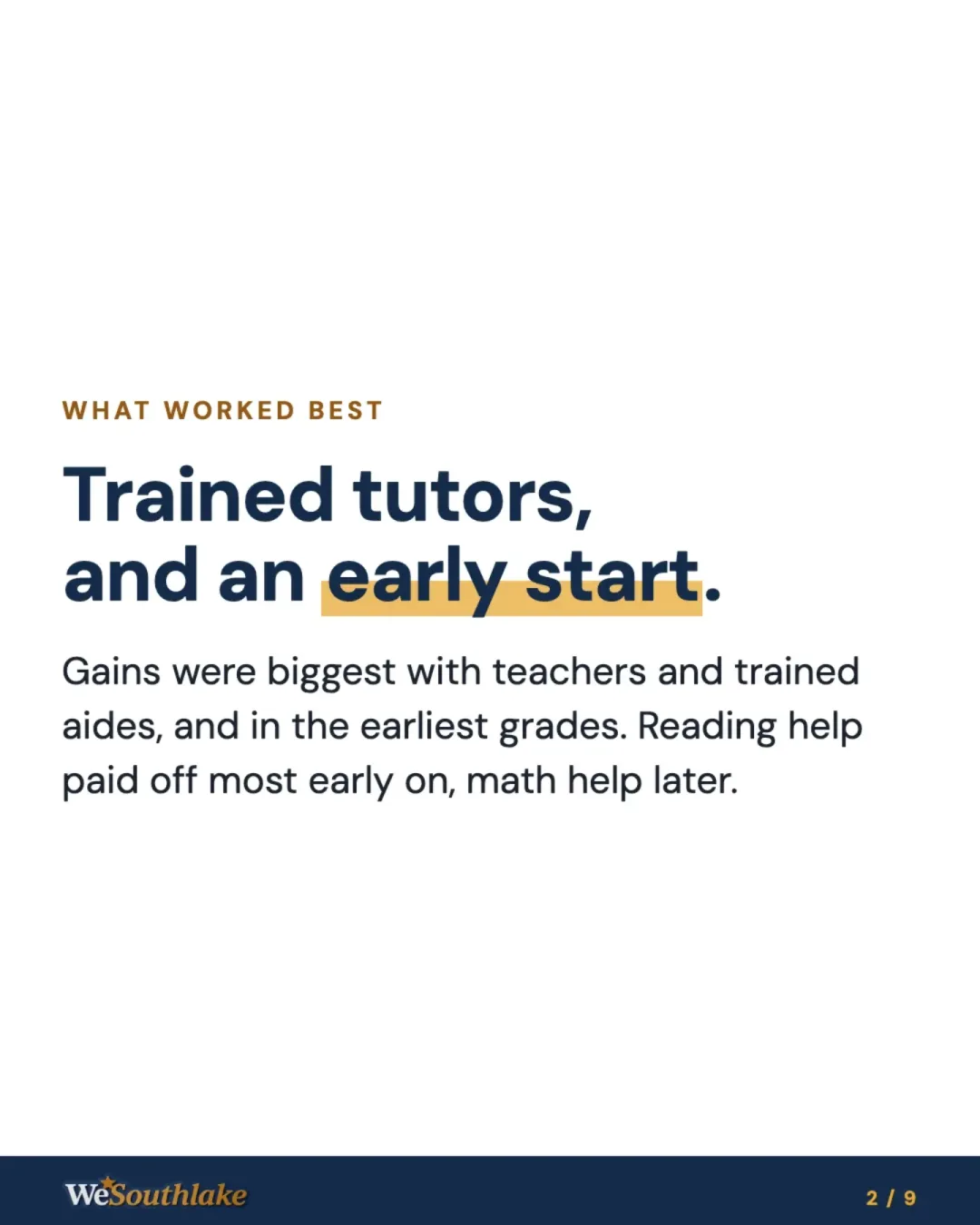
What worked best: tutors who were teachers or trained aides, and an early start. Reading tutoring paid off most in the earliest grades, math tutoring in the later ones.
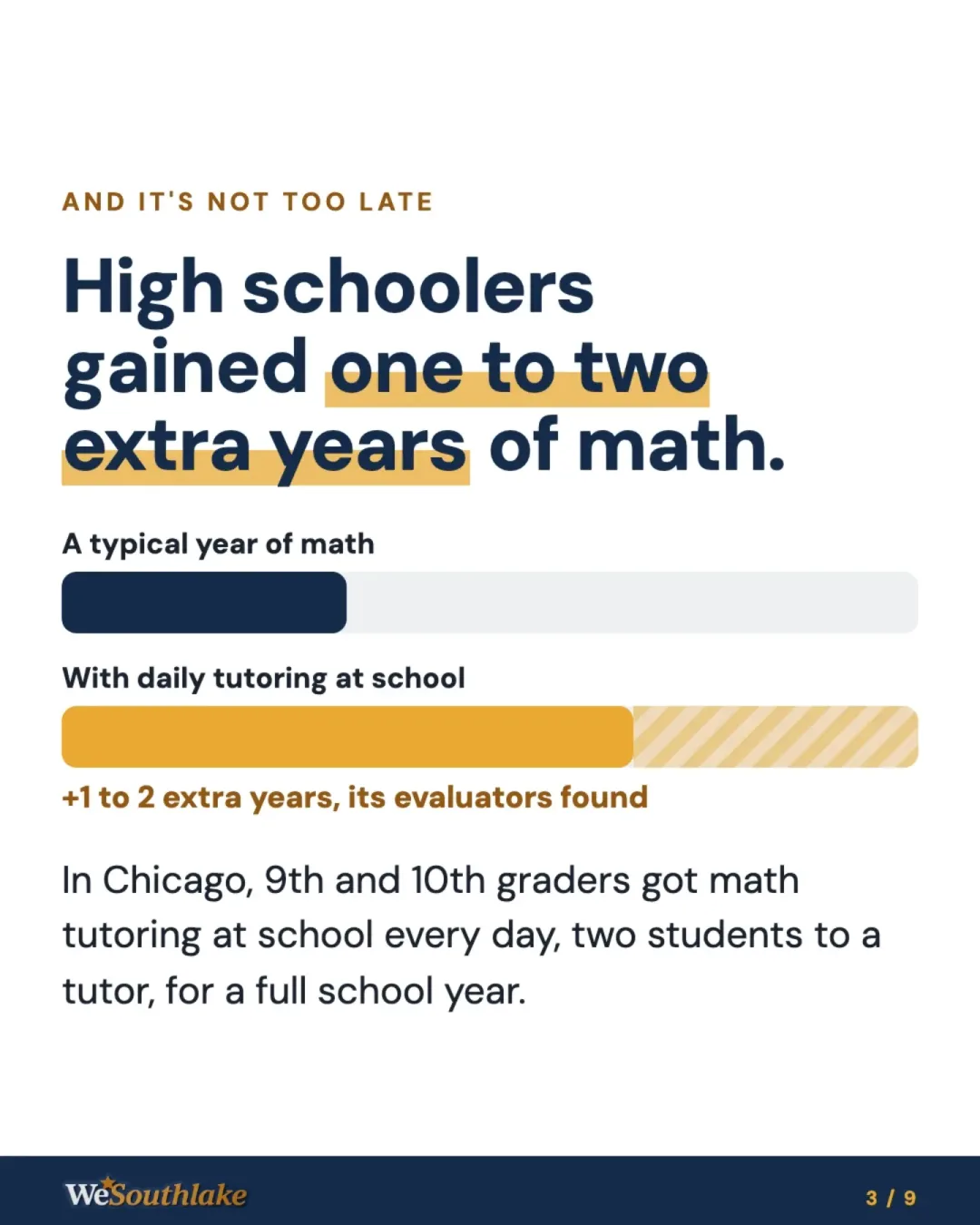
And it's not too late. The review's one big high-school study tutored 9th and 10th graders in Chicago in math every school day, two students to a tutor, for a full year. The program's evaluators found students learned "between one and two extra years of math" on top of a typical year.
And beyond reading and math: a separate review of 105 studies, in the Journal of Educational Psychology, found students who learned to program "outperformed those who did not" in creative thinking, math, metacognition and reasoning. The same review found "school achievement and literacy" benefited the least.
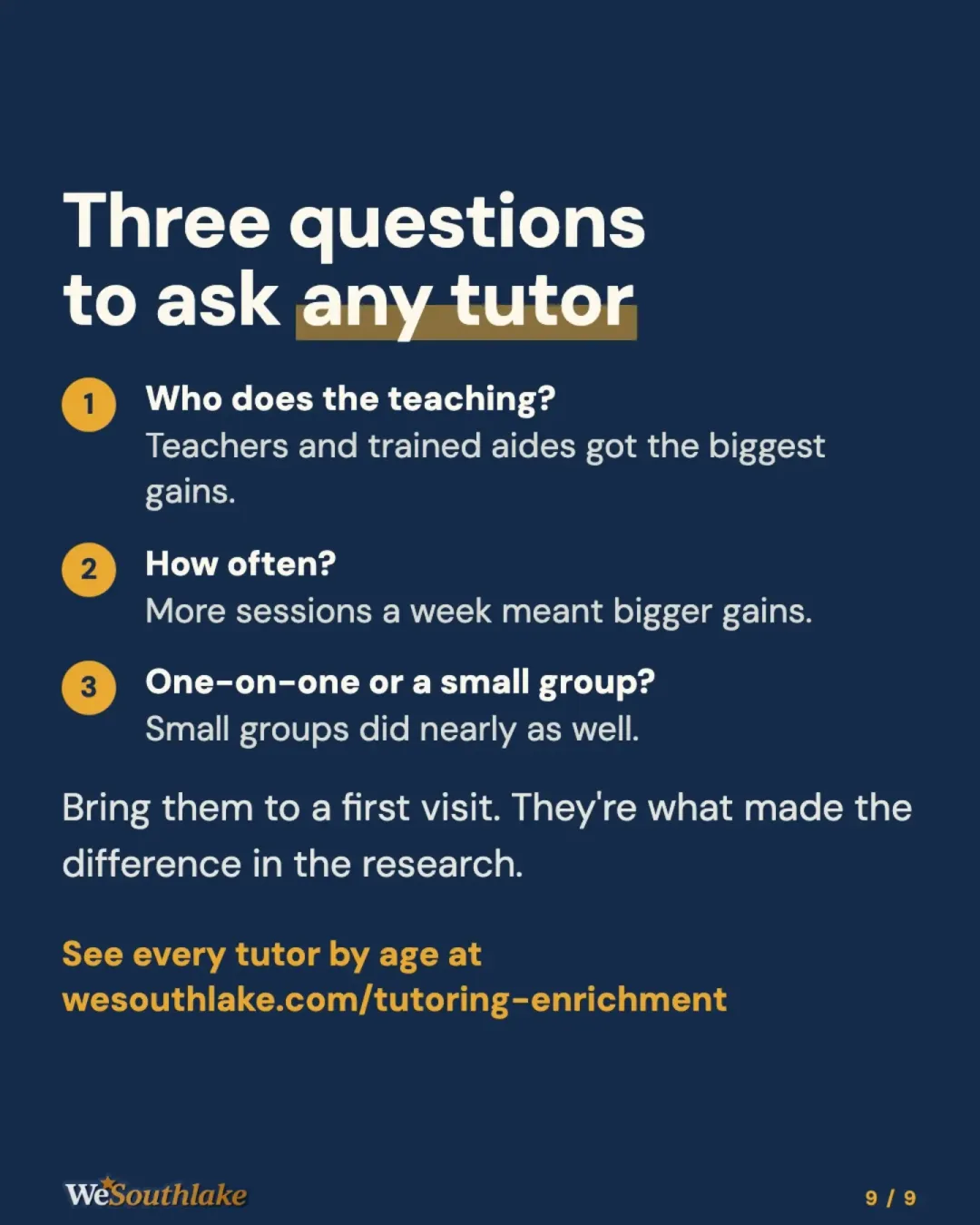
So, three questions to ask any tutor: Who does the teaching? How often? And one-on-one, or a small group? In the research, more sessions a week meant bigger gains, and small groups did nearly as well as one-on-one.
One honest note: this research is about tutoring and coding in general, not any particular tutor, class or learning center. The tutoring studies were mostly school-day programs for younger kids, and after-school tutoring showed smaller gains, though still real ones. That's what the questions are for.
Here are thirteen places nearby, sorted by what your student needs.
In this post (13)
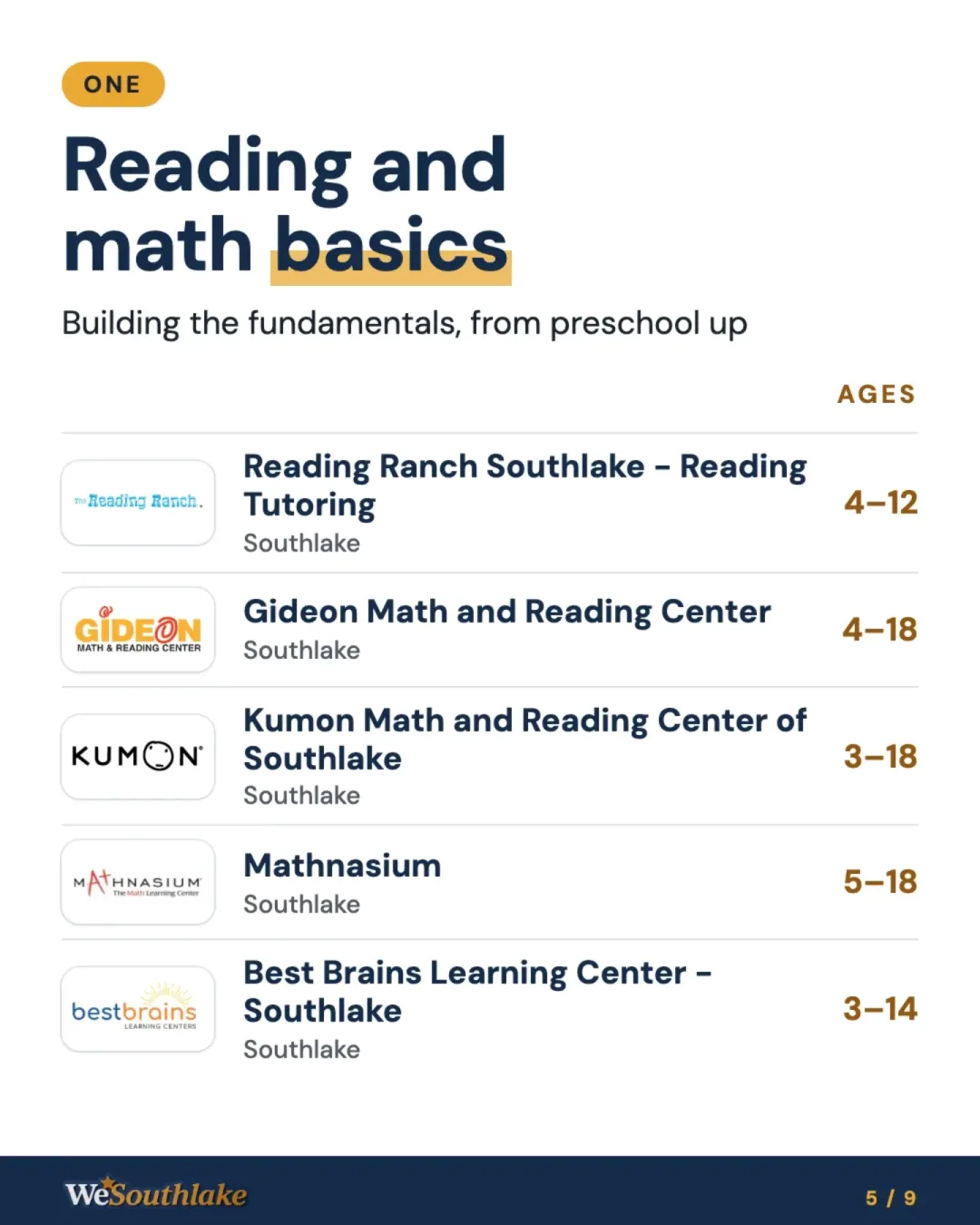
 Reading Ranch Southlake - Reading TutoringTutoring & Enrichment · Southlake
 Gideon Math and Reading CenterTutoring & Enrichment · Southlake
 Kumon Math and Reading Center of SouthlakeTutoring & Enrichment · Southlake
 MathnasiumTutoring & Enrichment · Southlake
 Best Brains Learning Center - SouthlakeTutoring & Enrichment · Southlake
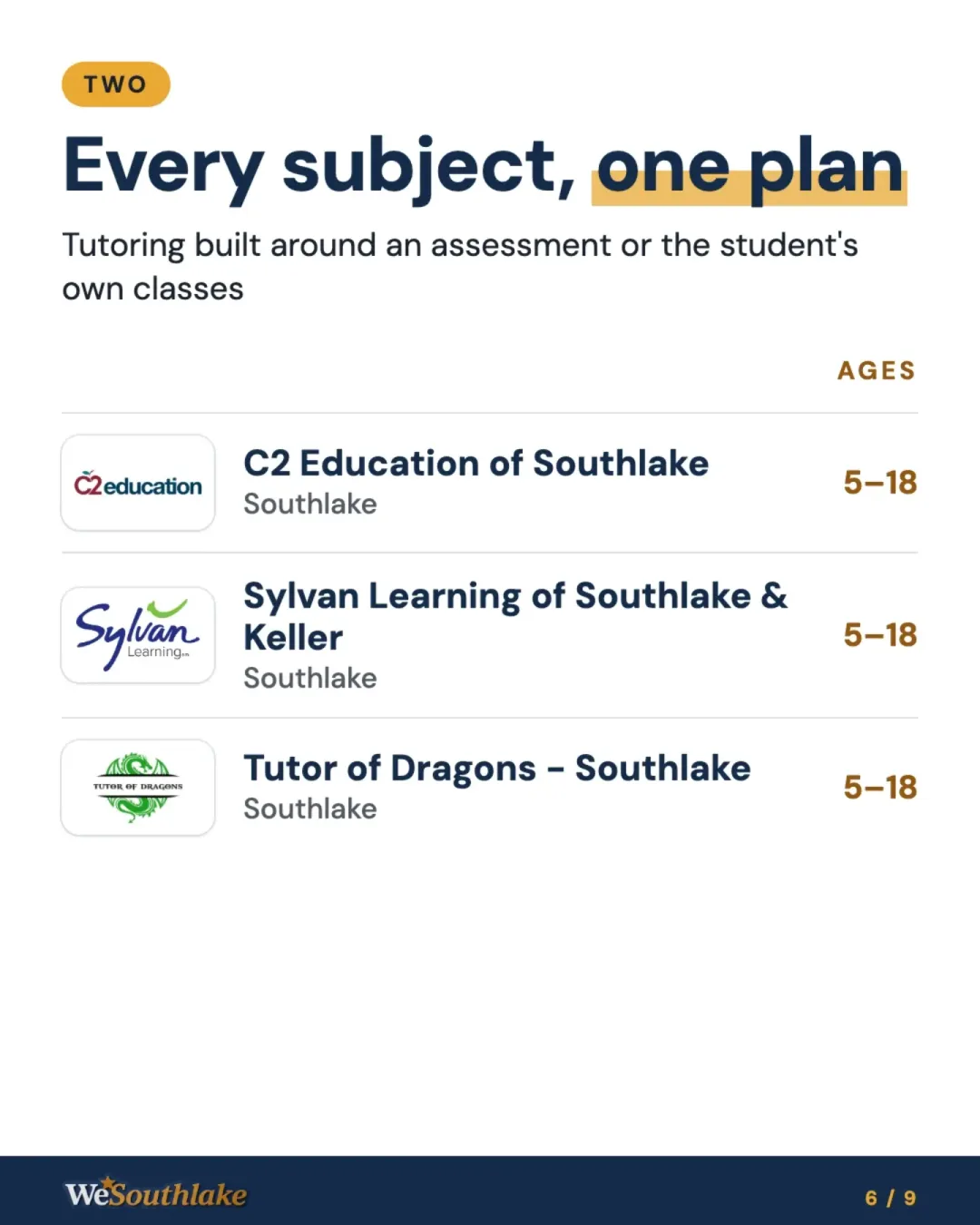
 C2 Education of SouthlakeTutoring & Enrichment · Southlake
 Sylvan Learning of Southlake & KellerTutoring & Enrichment · Southlake
 Tutor of Dragons - SouthlakeTutoring & Enrichment · Southlake
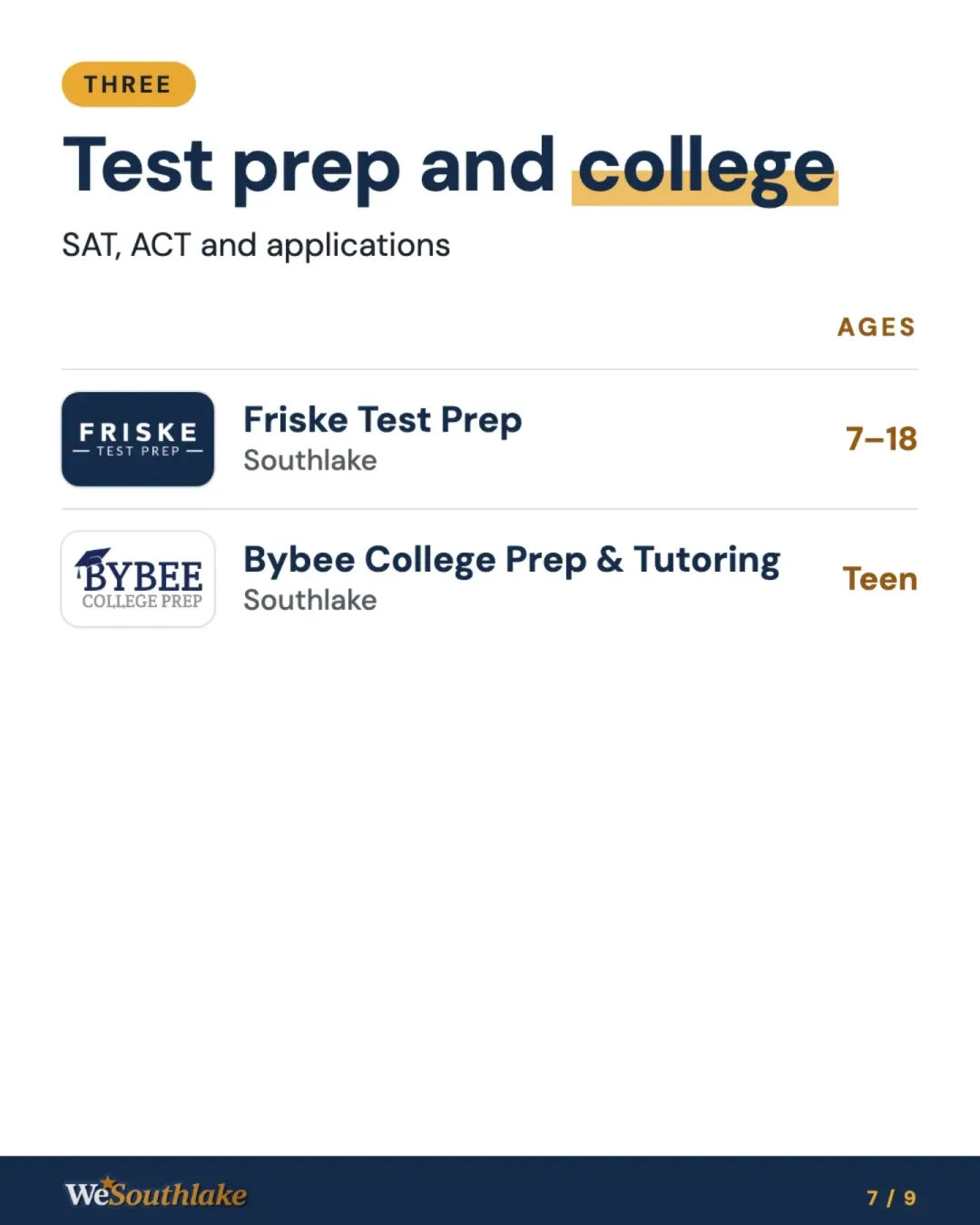
 Friske Test PrepTutoring & Enrichment · Southlake
 Bybee College Prep & TutoringTutoring & Enrichment · Southlake
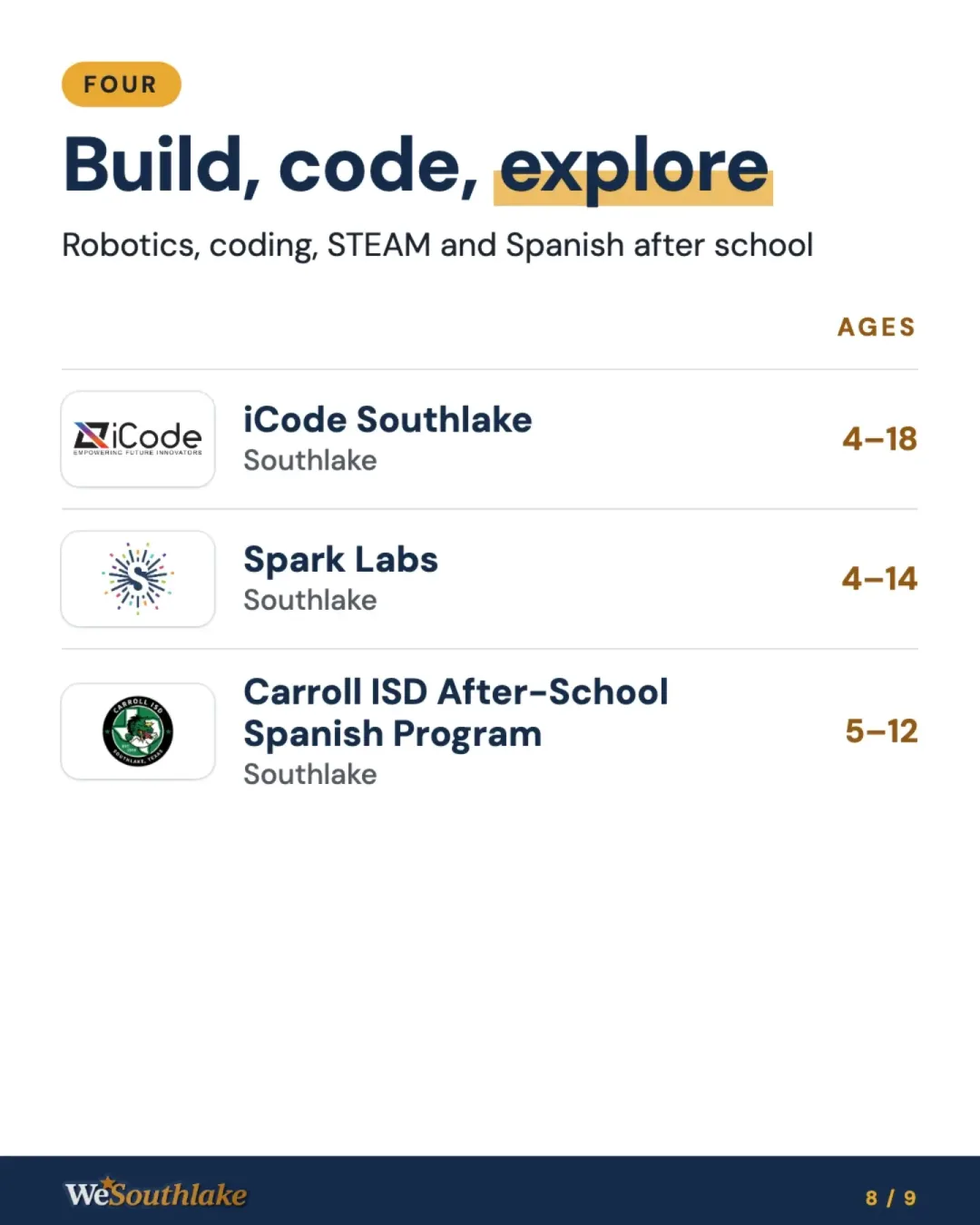
 iCode SouthlakeTutoring & Enrichment · Southlake
 Spark LabsTutoring & Enrichment · Southlake
 Carroll ISD After-School Spanish ProgramTutoring & Enrichment · Southlake